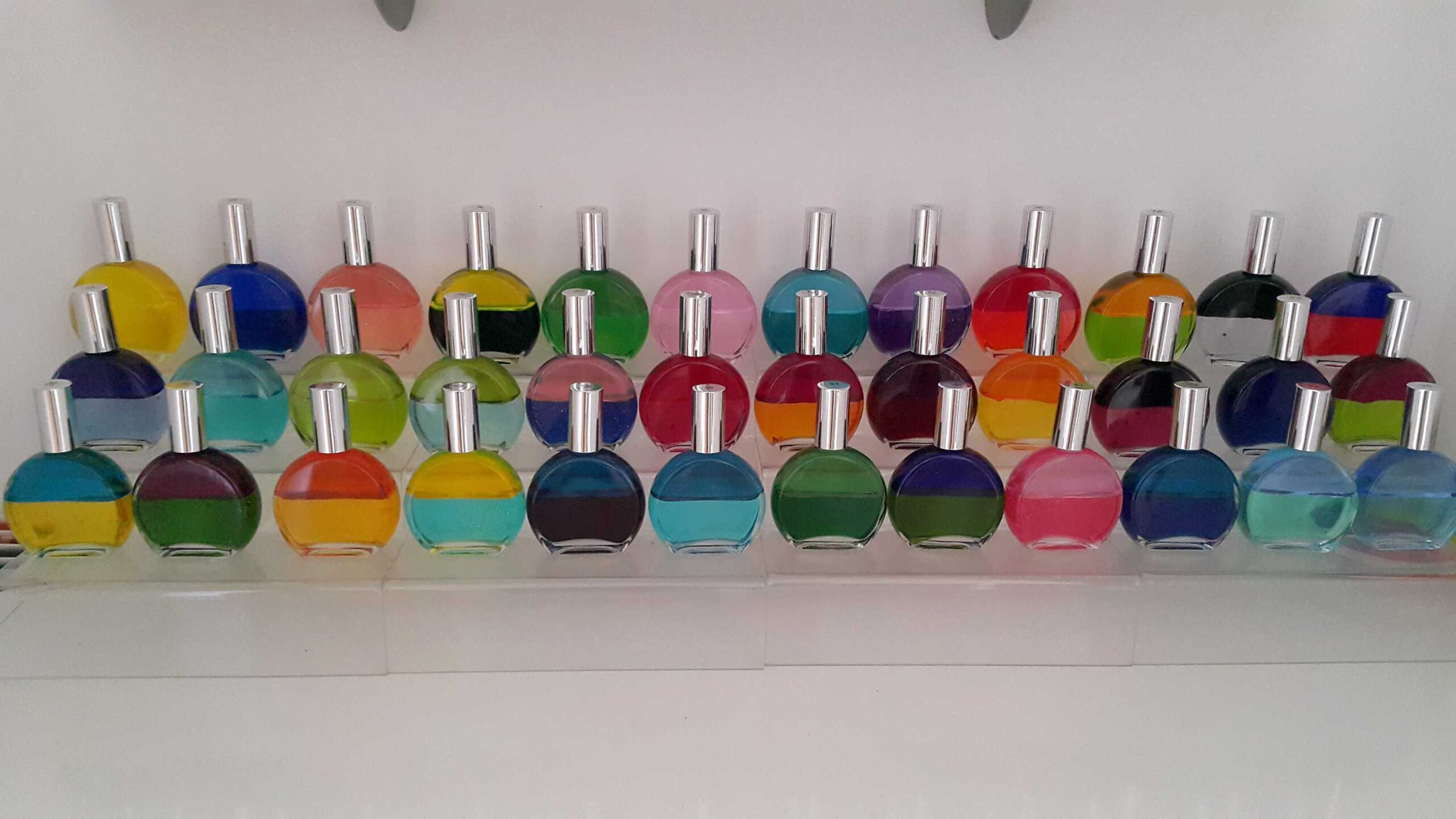
Colourmirrors – barvni sistem ohranjanja notranjega veselja in ustvarjanja lepega življenja
Do konca svojega življenja…bi rad vedel kaj je svetloba! Albert Einstein
Colour Mirrors je močno zdravilno orodje, ki se uporablja predvsem za pomoč pri duhovnem razvoju. So sistem čudovitih barvnih olj in esenc, ki se usklajujejo s človeško naravo in vam lahko pomagajo najti pravi namen v življenju.
Barve zdravijo dušo. Strah in žalost prežemajo z ljubeznijo in veseljem, energijama po katerih hrepeni psihično ranjeno človeštvo. In zdravijo. Barvna razbiranja nam pokažejo izzive s katerimi se moramo soočiti v življenju, nadarjenosti, ki se jih velikokrat ne zavedamo, potenciale, ki jih bomo razvili in radost, ki jo lahko občutimo, ko izpolnimo središče naše duše. Večna modrost svetlobe ustekleničena v barvnih oljih in esencah sistema Colour Mirrors nam pokaže in daje možnost kako lahko ustvarimo nebesa na zemlji in v našem osebnem življenju. Odsevajo vonj in življenje kot ga zaznava naša podzavest.
Splošno, raziskovalno in historično znano je, da ima vsaka barva svoj pomen, barvni terapevti pa uporabljajo dobljeno informacijo, da prepoznajo vzroke človekovih težav in osebnih dram povezanih z denarjem, odnosi, življenjsko potjo, kariero, težo in šibkim zdravjem. Kot primer pomena barve, lahko predstavimo rumeno, kot eno od osnovnih barv ter prikažemo njene pozitivne in negativne vidike:
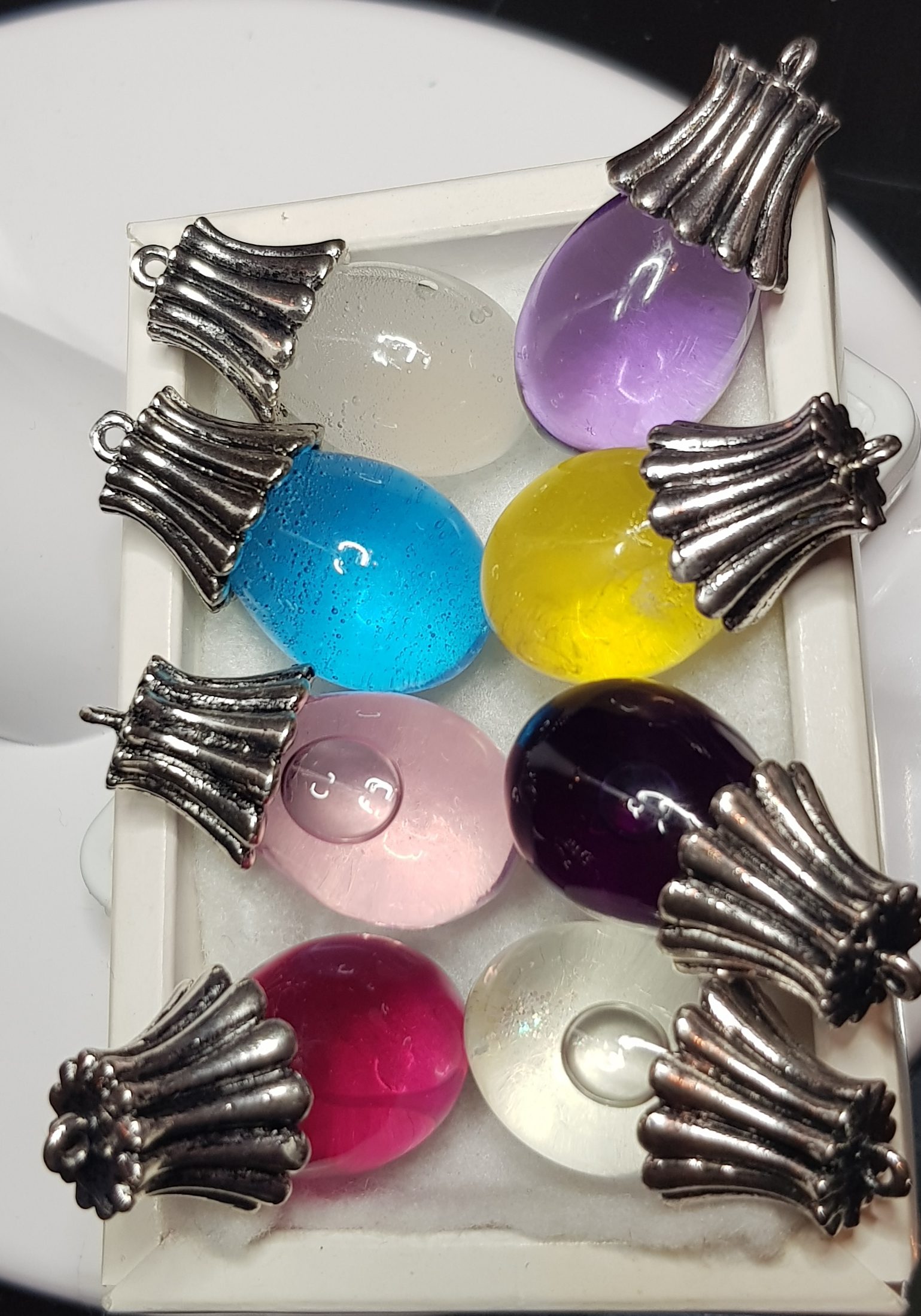
Pozitivni: fizični (smeh), čustveni (radost-sončna barva), mentalni (jasnost-bistrost) in duhovni (lahkost duha)
Negativni: fizični (čiri v sončnem pletežu), čustveni (strah),mentalni (zmedenost) in duhovni (ego-bitka nižjega jaza z božansko voljo-višjim jazom)
Večina današnjega osnovnega razumevanja barv se pripisuje Newtonu in izhaja iz 17.stoletja. (Clotsche, 1992) Vendar obravnava Newton le fizikalno stran barv, Goethe pa doživljajsko. Newton ne najde mesta za škrlatno barvo (Trstenjak, 1996) ki jo Goethe poimenuje po italijanskem mestu Magenta. Goethe je ponovno odkril Aristotlovo, da izhajajo barve kot jih vidi človek, iz štirih elementov, zraka, vode zemlje in ognja.( McLeod,2006) Goethe razporeja barve v krogu modro-rumeno-škrlatno. Heimendahl pa barve sistematično povezuje z biološko funkcijo človeka, tako, da dobi elementarno ontološko ureditev barv kot funkcij svetlobe (Trstenjak, 1996). Sistem zdravljenja Colourmirrors izhaja iz Južne Afrike. Vsebuje 87 stekleničk, kjer so aromatizirane barve mešane z olji in 52 razpršilnih esenc. Z združevanjem enake količine dveh primarnih barv je avtorica sistema Colourmirrors Melissie Jolly, dobila sekundarne barve (oranžno, vijolično, zeleno) . Z mešanjem primarnih in sekundarnih barv pa je dobila terciarne barve. Primer: dve tretjini najbližje primarne barve je pomešala s tretjino najbolj oddaljene primarne barve . Magenta je npr. 2/3 rdeče pomešane z 1/3 modre. Koralna je 2/3 rdeče pomešana z 1/3 rumene. Barve je oplemenitila s svetlobo, ker je vedela, da problem na katerega posije svetloba postane močnejši. Učinek pastelnih barv je veliko močnejša od globljih barv.
Ko opazujemo barve in razmišljamo katera nam je najbolj všeč, razmišljamo o lepoti barve, ki jo naše oko zaznava kot najlepšo. V istem hipu pozabimo na vsakdanje misli in življenje kot nam ga prikazujejo drugi – mediji, dogodki, naše opazovanje na katerega vplivajo naš značaj, razpoloženje in zunanje okoliščine. Barve nas nežno prisilijo, da razmišljamo o tistem, kar ni vsakdanje, bi pa bilo dobro, da bi postalo vsakdanja resničnost.
Barvna terapija je pomoč pri prepoznavanju naših izzivov, naravnih talentov, potencialov, ki jih lahko razvije v prihodnosti in sporočilo njegove duše – višjega jaza, ki nam pokaže pot veselja in radosti v življenju. Hkrati prinaša klientu nekaj pomembnih elementov v življenju: razumevanje, nežne a učinkovite spremembe v pogledu na vsakdanje življenje, zanesljivost mišljenja, čustveno stabilnost, notranjo srečo in zadovoljstvo, izpolnjenost, razvoj in dvig zavesti, odgovore na posameznikova vprašanja.
Uporaba in sestava oljnih stekleničk in esenc
Olja se lahko uporabljajo v kopelih, kot mazila, za meditiranje, lahko pa se cele stekleničke polagajo na različne dele telesa. Vsebujejo: olje avokada, olja esenc, prečiščeno vodo in rastlinska barvila.
Esence se razpršijo okoli telesa ali le na določene točke, kjer čistijo prostor. Lahko se razpršijo v kopel, uporabijo pri meditaciji ali pa se razpršijo v dlani in vdihnejo prelepe zdravilne arome. Čistijo prostor za manifestacijo, očistijo prostor tako, da stari vzorci razpadejo in se ne ponavljajo več, čistijo terapevtske prostore pred ali po terapiji in osvežijo prostor. Vsebujejo: olja esenc, prečiščeno vodo in rastlinska barvila. Esence imajo različna imena: angeli, zmaji in elementi.
Barvni praktik sistema Colourmirrors vedno gleda in določa komplementarne barve tistim barvam, ki jih je izbral pacient ali stranka. Če pacient izbere rumeno barvo, bo terapevt poiskal vijolično kot komplementarno barvo. Terapevt poišče toliko komplementarnih barv, kolikor barv je izbral pacient. V stekleničkah sta dve barvi zato terapevt upošteva pomen obeh barv in njunih komplementarnih barv.
Ta način omogoča Colourmirrors praktiku identifikacijo skritih vzorcev, ki zadržujejo klienta v negativnih vidikih izbrane barve. Zaključek fizične terapije ali terapevtskega razbiranja na daljavo je, da praktik svetuje stranki na katere načina lahko uporablja v našem primeru izbrano rumeno barvo, hkrati pa mu da tudi informacijo, ki ga bo zdravila. Najlepša informacija, ki jo praktik lahko podari svoji stranki pa je, da preko barv, ki jih stranka izbere vedno razbere strankine naravne talente in potenciale, ki jih bo razvila v prihodnosti ter s tem na mehak način rešila svoje izzive.
Praktik lahko opravi tudi razbiranje na daljavo, pri čemer klient izpolni obrazca ter ju pošlje (po e-pošti) terapevtu v razbiranje. Barvno razbiranje pomaga pri: doseganju fizične, mentalne, čustvene in duhovne harmonije, pri osebni rasti, vodstvu in življenjskem namenu, osvoboditvi in čiščenju blokad, dvigu samozavesti in samospoštovanja, podobi telesa in težavah s težo, pri vzpostavljanju harmoničnih odnosov klienta do sebe, svoje okolice, svojih izzivov, talentov, potencialov in notranjih ciljev, ki se kot uspehi, veselje, zadovoljstvo manifestirajo v njegovem vsakdanjem življenju.
Dr. Tadeja Jere Jakulin
Literatura:
- Amber, R. (1983) Color Therapy – Aurora Press. Santa Fe.
- Corvo, J, Verner-Bonds, L.(2004) Healing with Color Zone Therapy. The Crossing Press.Freedom. California
- Emoto, M. (2004) Sporočilo vode. Sanje. Ljubljana
- Emoto, M. (2004) The Healing Power of Water.Hay House. California.
- Jere, Jakulin (2016) Colour Mirrors svet sistemov: povezanost barv in števil. Adriaprint. Rijeka.
- Klotsche, C. (1992) Color Medicine: The secrets of color/vibrational healing.Light Technology. Flagstaff McLeod, J. (2006) Colours of the Soul. O’ Books.Winchester.
- Melchizedek, D. (2005) Živeti v srcu. Genija.Ljubljana
- Merivale, P. (2007) Colourworks – Zdravilna moč barv. Star Elysium. Ljubljana
- Trstenjak, A. (1996) Psihologija barv. Initut Antona Trstenjaka. Ljubljana
- Trstenjak, A. (1978) Človek in barve. DDU. Ljubljana
- Verner-Bonds, L. ( 2000) The Complete Book of Colour Healing.GodsField Press. London
- Walker, M. (1991) The Power of Color. Jain publishers, ltd. New Delhi
Colourmirrors – a colour system for maintaining inner joy and creating a beautiful life
“I want to know what light is for the rest of my life!”- Albert Einstein.
Colour Mirrors is a powerful healing tool, used primarily to aid in spiritual development. Colours heal the soul. They imbue fear and sadness with love and joy, the energies for which a psychologically wounded humanity longs. And they heal. They reflect the fragrance and life as perceived by our subconscious. Colour explorations show us the challenges we must face in life, the talents we are often unaware of, the potential we will develop and the joy we can feel when we fulfil the centre of our soul. The eternal wisdom of light bottled in the colour oils and essences of the Colour Mirrors system shows us how to create heaven on earth and in our personal lives.
It is widely researched and historically known that every colour has its meaning, and colour therapists use the information to identify the causes of people’s problems and personal dramas related to money, relationships, life path, career, weight and poor health. As an example of the meaning of colour, we can present yellow as one of the primary colours and show its positive and negative aspects:
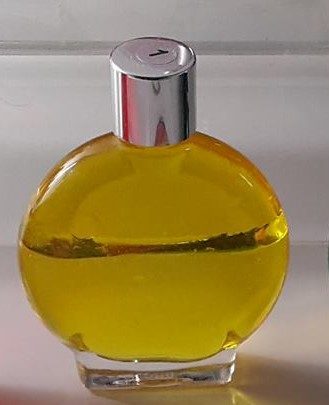
Joyous: physical (laughter), emotional (joy-sunshine), mental (clarity-clarity) and spiritual (lightness of spirit)
Harmful: physical (solar plexus chakras), emotional (fear), mental (confusion) and spiritual (ego-lower self battling with divine will-higher self)
Most of today’s basic understanding of colours is attributed to Newton and dates back to the 17th century (Clotsche, 1992). However, Newton deals only with the physical side of colours, whereas Goethe deals with the experiential side. Newton finds no place for purple (Trstenjak, 1996), which Goethe named after the Italian city of Magenta. Goethe rediscovered Aristotle’s idea that colours, as seen by man, are derived from the four elements, air, water, earth and fire( McLeod,2006). Goethe arranges the colours in a circle of blue-yellow scarlet. Heimendahl, on the other hand, systematically relates colours to the biological function of man to obtain an elemental ontological arrangement of colours as functions of light. (Trstenjak,1996)
The Colourmirrors healing system originated in South Africa. It contains 87 bottles with flavoured colours mixed with oils and 52 spray essences. By combining equal amounts of two primary colours, the author of the Colourmirrors system, Melissie Jolly, obtained secondary colours (orange, purple, green). By mixing primary and secondary colours, she received tertiary colours—for example, two-thirds of the closest primary colour mixed with one-third of the furthest primary colour. Magenta is, e.g. 2/3 red mixed with 1/3 blue. Coral is 2/3 red mixed with 1/3 yellow. She enhanced the colours with light because she knew that the problem with which the light shines becomes stronger. The effect of pastel colours is much stronger than deeper colours.
When we look at colours and think about which one we like best, we think about the beauty our eye perceives as the most beautiful. In that exact moment, we forget our everyday thoughts and life as it is presented to us by others – our character, mood and external circumstances influence the media, events, and our observation. Colours gently force us to think about what is not every day but would be good to become a daily reality.
Colour therapy helps to identify our challenges, our natural talents, the potentials we can develop in the future and the message of his soul – the higher self that shows us the way to joy and gladness in life. At the same time, it brings to the client some essential elements in life: understanding, gentle but influential changes in the outlook on everyday life, reliability of thought, emotional stability, inner happiness and contentment, fulfilment, development and raising of consciousness, and answers to one’s questions.
The use and composition of oil bottles and essences
The oils can be used in baths, as salves, for meditation, or on different body parts. They contain avocado oil, essential oils, purified water and vegetable colouring.
The essences are diffused around the body or at specific points to purify the area. They can be sprayed into the bath, used in meditation or sprayed into the palms of the hands to inhale the beautiful healing aromas. They cleanse the area for manifestation, so that old patterns break down, cleanse the therapeutic space before or after therapy and refresh the room. Bottles contain essential oils, purified water and vegetable colouring. The essences have different names: angels, dragons and elements.
The Colourmirrors practitioner always looks at and determines complementary colours to those chosen by the patient or client. If the patient uses yellow, the therapist will use purple as complementary. The therapist looks for as many complementary colours as the patient has chosen. There are two colours in the bottles, so the therapist considers the meaning of the two colours and their complementary colours.
The conclusion of the physical therapy or therapeutic unpacking at a distance is that the practitioner advises the client on using the selected yellow colouring in our case. This method enables the Colourmirrors practitioner to identify hidden patterns holding the client in the negative aspects of the chosen colour. It also gives the client information that will heal them. The most beautiful information that a practitioner can provide his client is that through the colours that the client chooses, he always understands the client’s natural talents and potentials that he will develop in the future and thus solve his challenges softly.
Colour unpacking helps with the following:
- Achieving physical, mental, emotional and spiritual harmony, personal growth, guidance and life purpose,
- Releasing and clearing blockages,
- Raising self-confidence and self-esteem, body image and weight issues,
- Establishing harmonious relationships with the client self.
The practitioner can also do a remote discernment, where the client fills in forms and sends them (by email) to the therapist for insight.
Dr. Tadeja Jere Jakulin
http://www.colourmirrors.com www.silt.si , www.korani.net
Literature:
1. Amber, R. (1983) Colour Therapy – Aurora Press. Santa Fe.
2. Corvo, J, Verner-Bonds, L.(2004) Healing with Color Zone Therapy. The Crossing Press.Freedom. California
3. Emoto, M. (2004) The Message of Water. Dream. Ljubljana
4. Emoto, M. (2004) The Healing Power of Water.Hay House. California.
5. Jere, Jakulin (2016) Colour Mirrors the world of systems: the interconnectedness of colours and numbers. Adriaprint. Rijeka.
6. Klotsche, C. (1992) Colour Medicine: The secrets of colour/vibrational healing.Light Technology. Flagstaff McLeod, J. (2006) Colours of the Soul. O’ Books.Winchester.
7. Melchizedek, D. (2005) Living in the Heart. Genija.Ljubljana
8. Merivale, P. (2007) Colourworks – The healing power of colour. Star Elysium. Ljubljana
9. Trstenjak, A. (1996) The Psychology of Colour. Anton Trstenjak Institute. Ljubljana
10. Trstenjak, A. (1978) Man and Colours. DDU. Ljubljana.
11. Verner-Bonds, L. ( 2000) The Complete Book of Colour Healing.GodsField Press. London
12. Walker, M. (1991) The Power of Colour. Jain publishers, ltd. New Delhi